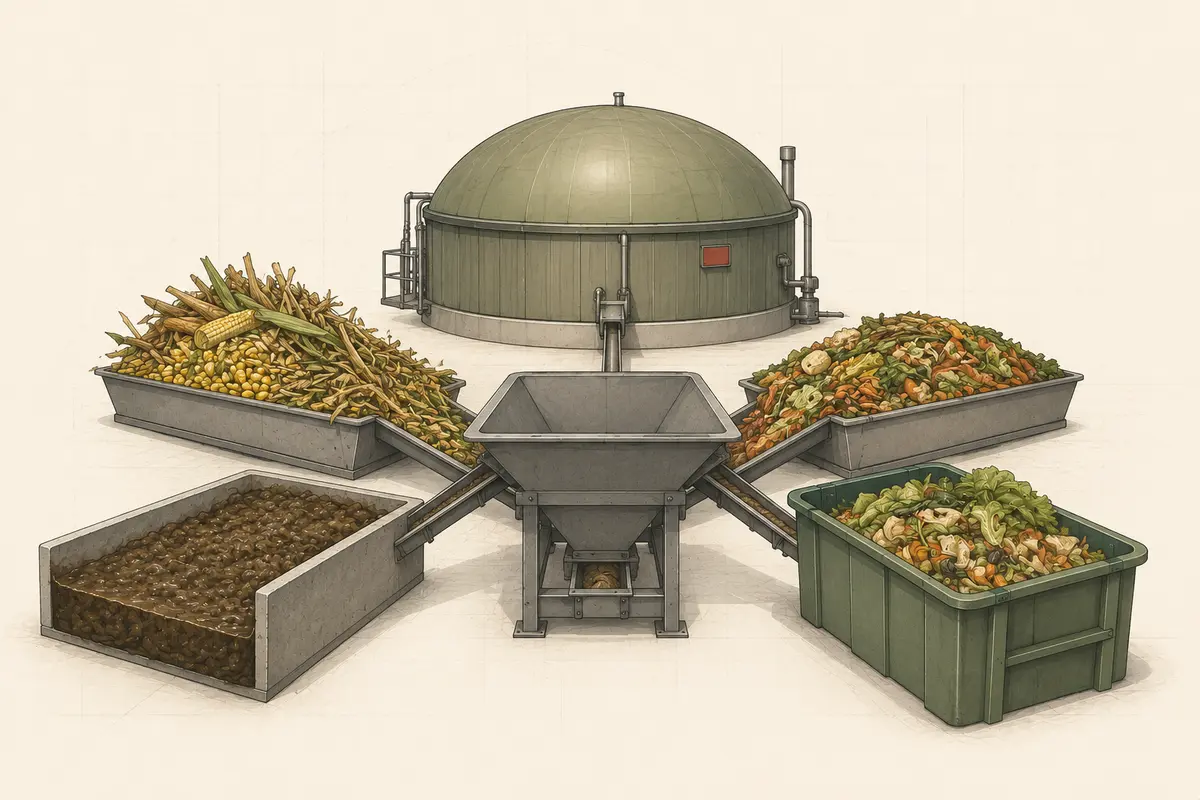
Biogas can be produced from many organic materials, but not every feedstock is equally suitable for every plant. The choice affects gas quantity and quality, process stability, equipment, logistics and digestate use.
Common feedstock groups
- Solid manure and slurry provide moisture and microorganisms and often form a stable basis for the process.
- Crop residues include various shredded residues, but their degradability must be assessed.
- Energy crops can offer good gas potential, but require agricultural land and reliable supply.
- Food industry by-products are often energy-rich, but their composition can vary considerably.
- Separately collected biowaste can be processed with suitable reception, pretreatment and contaminant controls.
Why does analysis matter more than the feedstock name?
Two deliveries of apparently identical feedstock can differ in dry and organic matter content or degradability, or contain sand, plastic, stones and other unwanted materials. Planning must therefore consider composition, expected biogas yield, seasonal availability, transport costs and storage options.
Materials high in fats, proteins or readily degradable sugars need particular care. They can increase gas production, but sudden or excessive feeding may upset process balance. Co-digestion of several feedstocks should therefore follow a defined recipe and process monitoring, not improvisation.
Logistics are part of the process
Feedstock must reach the plant, be received without unnecessary odours or losses, be reduced in size or homogenised where needed, and be fed safely. Long-term supply contracts, incoming-material checks and realistically sized storage are as important as the digester itself.
Sources and further reading
- T. Al Seadi et al., Priručnik za bioplin, BiG>East, 2008.
- U.S. EPA – Basic Information about Anaerobic Digestion
This article is for information only. It does not replace design work, a professional assessment, or legal, environmental or financial advice for a specific project.