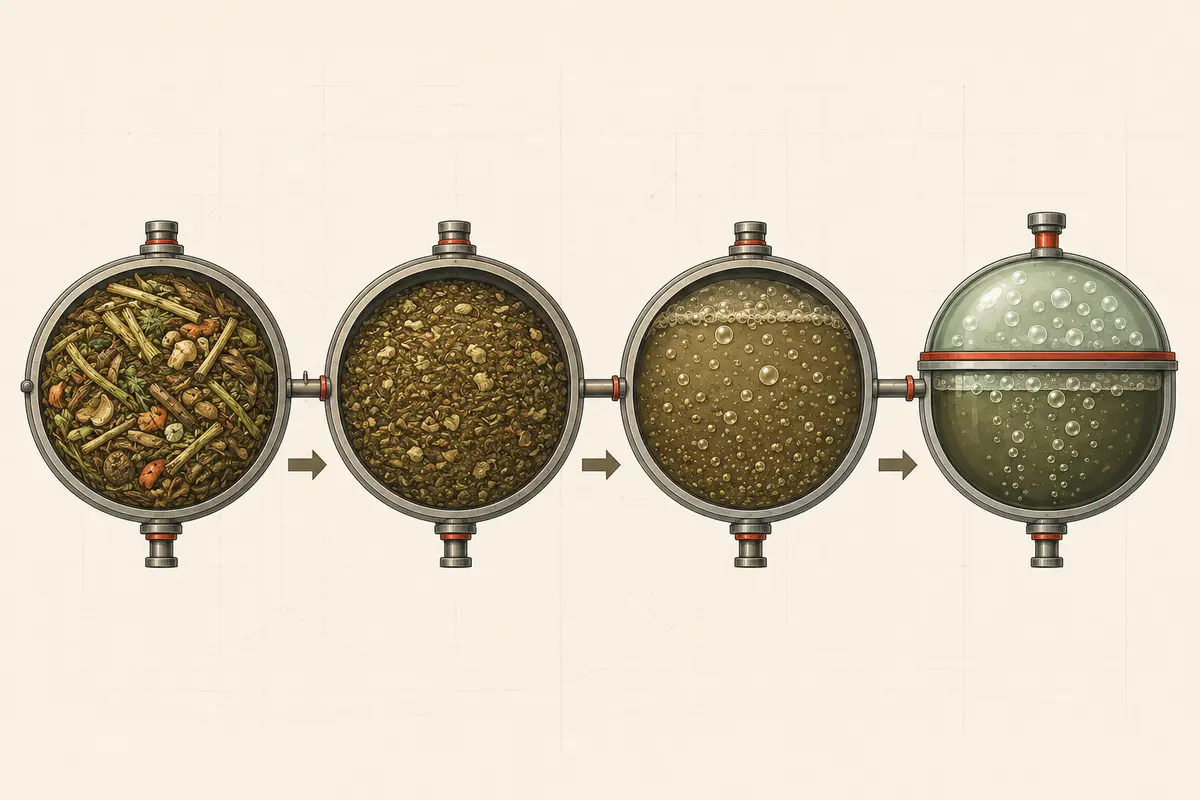
Anaerobic digestion is a chain of linked biological reactions. The products of one group of microorganisms become feed for another. If one stage is disturbed, the effects can spread through the entire process.
1. Hydrolysis
Complex organic compounds such as carbohydrates, proteins and fats first break down into smaller, soluble molecules. This step is particularly important for fibrous and difficult-to-digest feedstocks. Size reduction, mixing and an appropriate retention time can make the material more accessible to microorganisms.
2. Acidogenesis
In the second stage, simpler molecules are converted into organic acids, alcohols, hydrogen and carbon dioxide. This stage is rapid and can lead to acid accumulation if subsequent stages cannot keep pace. A falling pH is one sign that the process is out of balance.
3. Acetogenesis
The products of acidogenesis are then converted mainly into acetic acid, hydrogen and carbon dioxide. This stage depends on close cooperation among microorganisms because excessive hydrogen concentration can slow the desired conversion.
4. Methanogenesis
Methanogenic archaea produce methane mainly from acetate and from hydrogen and carbon dioxide. They are more sensitive to sudden changes in temperature, pH, loading and the presence of inhibitory substances. The digester is therefore fed gradually and monitored through several indicators, not just the current volume of gas produced.
Sources and further reading
- T. Al Seadi et al., Priručnik za bioplin, BiG>East, 2008.
- U.S. EPA – How Does Anaerobic Digestion Work?
This article is for information only. It does not replace design work, a professional assessment, or legal, environmental or financial advice for a specific project.