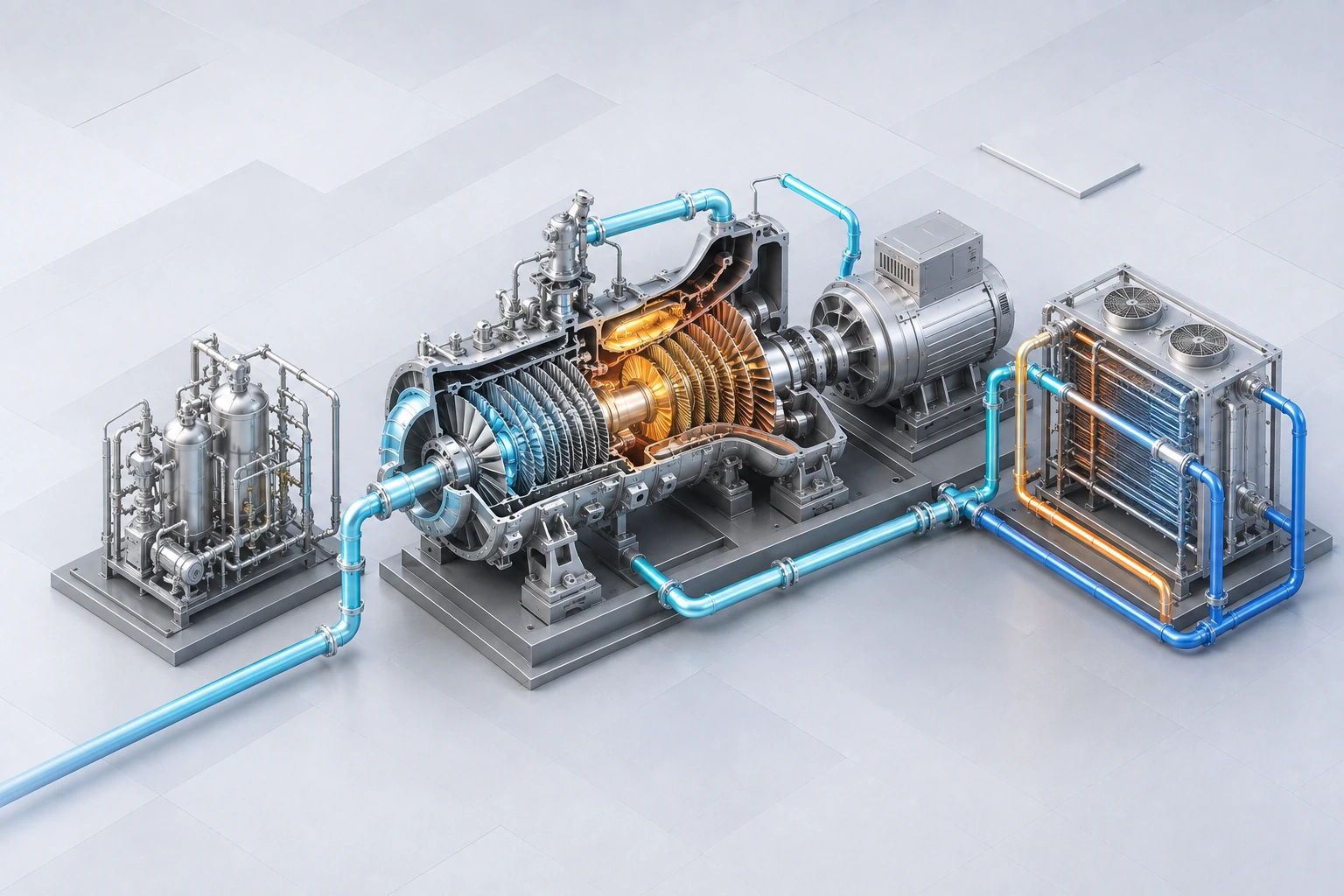
A gas turbine draws in and compresses air, mixes it with fuel and produces hot gases through combustion. As the gases expand through the turbine stage, the shaft drives a compressor and electrical generator. A microturbine uses the same basic principle in a more compact, often high-speed modular unit.
A microturbine is not a small gas engine
An engine converts combustion energy through pistons, a crankshaft and generator. A turbine has a rotating compressor and turbine wheel, continuous gas flow and a different heat-output profile. Selection should therefore consider more than rated electrical capacity.
Multiple microturbine modules can be combined. This helps match output to demand and allows maintenance on part of the system while other modules continue running. Larger industrial gas turbines have different economics and need larger, steadier fuel flows.
Why is biogas preparation demanding?
A turbine needs fuel of suitable calorific value and pressure. Condensate, particles and hydrogen sulphide must be removed to protect the compressor, combustion chamber, recuperator and heat exchanger. Depending on feedstock, siloxanes and other trace compounds that can form hard deposits at high temperatures also need monitoring.
Biogas compression consumes electricity. That auxiliary load, pressure loss through filters and variation in gas composition must be accounted for in net output when comparing the turbine with an engine.
Recuperator and heat recovery
Many microturbines use a recuperator to preheat compressed air with exhaust heat before combustion, improving electrical efficiency. Heat remains available downstream of the turbine and recuperator for hot water, steam, drying or absorption cooling.
High exhaust temperature can be valuable to a process requiring steam or hot air. If the site only needs low-temperature digester heating, the quantity and temperature of available heat should be checked against that demand.
When might a turbine have an advantage?
- when biogas flow is steady and sufficient for continuous operation
- when the site can clean and compress the gas to specification
- when high-temperature exhaust heat has a year-round use
- when few moving parts, compact modules and lower vibration matter
- when multiple modules suit growth or changing loads
What should be compared with a gas engine?
Compare technologies using the same annual gas flow and composition. Include net electricity after compression, heat actually used, service intervals, output derating under ambient conditions, spare-parts availability and part-load behaviour.
One catalogue figure is insufficient. Efficiency, emissions and maintenance depend on the model, air temperature, pressure, fuel and operation of the entire plant.
Sources and further reading
- U.S. EPA – Catalog of CHP Technologies
- U.S. EPA – Biogas Opportunities Roadmap
- U.S. EPA – What Is CHP?
This article is for information. Required gas quality and pressure, capacity, emissions, heat output and service terms must be confirmed for the particular turbine model. The illustration shows the principle, not a specific commercial device.