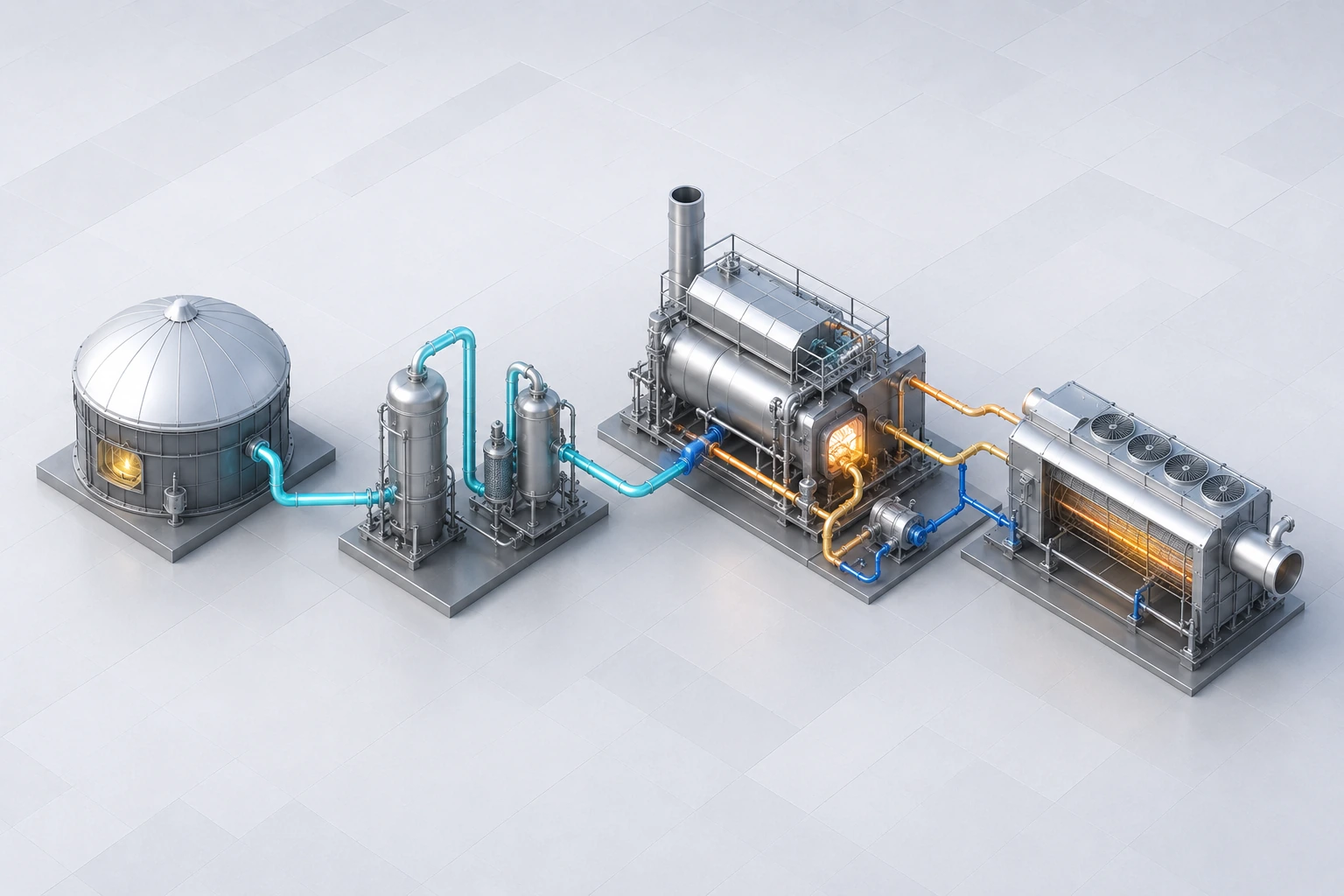
Direct heat use bypasses the generator and associated electrical equipment. The gas's chemical energy is converted directly to hot water, steam or hot air. This reduces the number of conversion steps, but the economics depend on demand coinciding with biogas production.
Where can the heat be used?
The most common on-site use is digester heating. Surplus heat can serve farm buildings, domestic or process hot water, grain and digestate drying, greenhouses, industrial furnaces or a steam boiler. Processes operating for many hours a year are more valuable than brief seasonal loads that leave gas without a useful destination most of the time.
How much gas cleaning is needed?
The treatment level depends on the burner and heating equipment. Condensate and droplets must be separated, particles filtered and hydrogen sulphide reduced to protect equipment and manage corrosion and emissions. A fan or compressor stabilises pressure, alongside a gas train, shut-off valves and flame supervision.
A boiler does not require CO₂ removal to biomethane quality. But a lower methane concentration means a lower calorific value and a higher volumetric flow. The burner and pipeline must therefore be selected for the actual biogas composition, rather than a catalogue specification for natural gas.
Hot water, steam or direct drying?
A hot-water boiler is practical for heating digesters and buildings. A steam boiler supplies higher-temperature energy for industrial processes but brings stricter requirements for water treatment, pressure, safety devices and supervision. In direct drying, combustion products may contact the material only if the process, hygiene and product-quality requirements allow it; otherwise a heat exchanger is used.
Balancing production and demand
The digester produces gas continuously, while heat demand often varies. Short-term gas storage, output control and a safe flare for surplus gas are needed. An oversized membrane gas holder cannot solve a seasonal surplus: it provides storage for hours, not months.
Advantages of a simpler process chain
- fewer conversions and relatively straightforward equipment
- potential to replace fuel oil, LPG or natural gas on site
- high utilisation when heat demand is continuous
- simpler maintenance than an engine, turbine or fuel cell
Often underestimated constraints
Heat is difficult to transport over long distances and loses value without a user. Steam or hot-water pipework, a backup boiler, frost protection and peak demand can materially change the investment. Local rules on emissions, pressure equipment, fire protection and the siting of gas equipment also need to be checked.
Sources and further reading
- U.S. EPA – Biogas Opportunities Roadmap
- U.S. EPA – An Overview of Renewable Natural Gas from Biogas
- U.S. EPA – What Is CHP?
This article is for information. Burner, boiler, gas-train, flue and safety-system sizing must be based on the actual gas, loads and applicable regulations. The illustration is not a detailed engineering diagram.