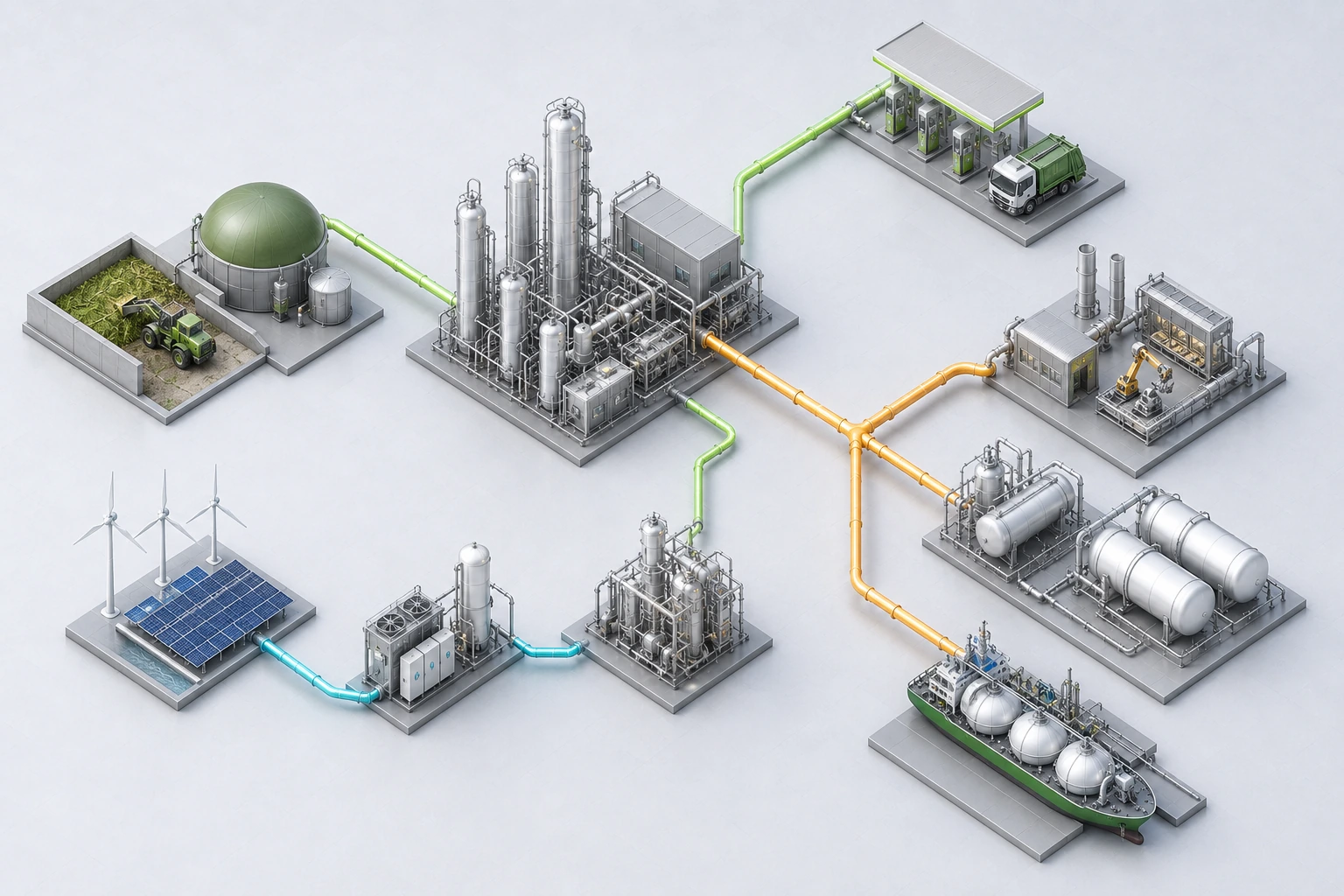
Biogas contains a substantial proportion of CO₂ that plants previously absorbed from the atmosphere. During upgrading to biomethane, this carbon dioxide is separated from methane. The resulting stream can be relatively concentrated, but it is not automatically a finished product: its composition and required purity depend on the upgrading technology and intended use.
What does biogenic CO₂ mean?
Biogenic carbon comes from biomass and the short biological carbon cycle, unlike fossil carbon from geological deposits. This distinction matters for greenhouse gas accounting, but does not remove the need to control leaks and energy use or demonstrate the carbon's origin.
From raw gas stream to marketable product
The stream from upgrading may contain traces of methane, oxygen, nitrogen, sulphur compounds, moisture and other impurities. For sale it is further cleaned, dried, compressed and often liquefied. Quality must meet the requirements of the intended use; food applications have particularly strict specifications and cannot be assumed suitable merely because the source is biogenic.
Potential markets
Purified CO₂ is used in the food and process industries, for inerting, cooling and, where applicable, in greenhouses. A local buyer reduces transport needs, but demand may be seasonal. Liquefaction allows distribution by road, with storage tanks, loading facilities and regular quality control.
Methanation with renewable hydrogen
In the reaction 4H₂ + CO₂ → CH₄ + 2H₂O, biogenic CO₂ and hydrogen are converted into synthetic methane. The hydrogen can be produced by water electrolysis using renewable electricity. The resulting methane enters the same gas supply chain as biomethane and can be stored or injected into the grid.
Methanation increases the use made of biogenic carbon, but requires substantial amounts of hydrogen and electricity. The electrolyser, compression, reactor, heat management and product-gas treatment form a separate industrial system. The project is most compelling when it can use variable renewable power and integrate the processes thermally.
Use or permanent storage?
If CO₂ is used in fuel or beverages, it generally returns to the atmosphere after use. It may displace fossil CO₂, but the carbon has not been permanently removed. Permanent geological storage of biogenic CO₂ can result in negative emissions, but requires transport and storage infrastructure, monitoring and an appropriate regulatory and accounting framework.
The main risk is assuming a buyer too early
Industrial CO₂ prices vary with local supply, purity, logistics and season. The market is smaller by volume than the energy market for methane. Before including CO₂ revenue in a business plan, the product specification, realistic treatment and transport costs, and credible long-term buyer interest should be established.
What should the project assess?
- quantity, composition, pressure and continuity of the separated CO₂ stream
- required purity and energy demand of further treatment or liquefaction
- distance, seasonality and minimum offtake of an actual buyer
- availability of renewable hydrogen and value of the additional methane
- accounting rules for biogenic carbon, its use and any eventual storage
Sources and further reading
- IEA Bioenergy Task 37 – Circular economy approaches and Power-to-X
- IEA Bioenergy Task 37 – Circular economy approaches to integration of anaerobic digestion with Power-to-X technologies
- Biomethane Industrial Partnership – BioCO₂ and biomethane
This article is for information only. Product quality, permits, pressure and cryogenic equipment safety, emissions accounting and commercial value must be confirmed for the particular location and market. The illustration is not a detailed process design.