Biogas and biomethane are often used as if they meant the same thing, but they describe different stages of the same energy chain. The distinction matters for technology, gas quality, investment and how the energy is sold.
Biogas: the product of a digester
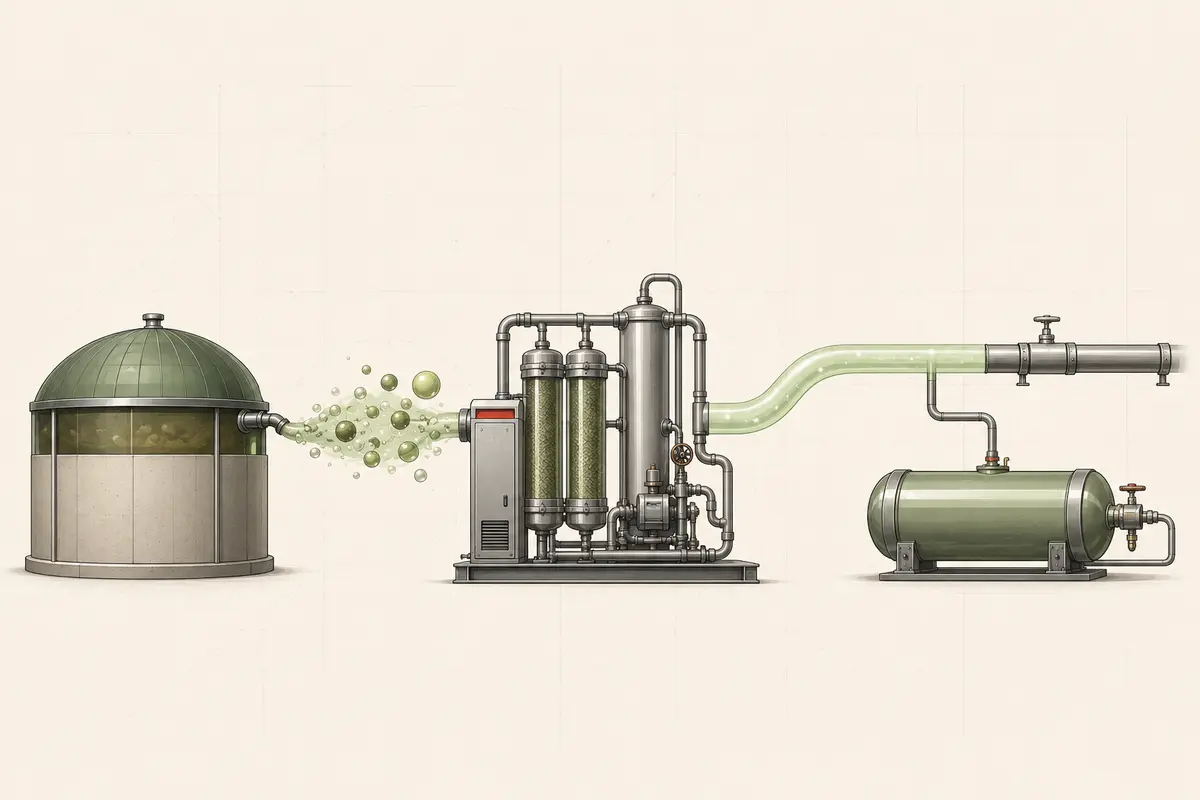
Raw biogas is produced by anaerobic digestion and usually contains methane and carbon dioxide, alongside water vapour and smaller amounts of other compounds. Its methane content depends on the feedstock and process. After basic treatment, it is commonly used on site, for example in a CHP unit or boiler.
Biomethane: upgraded renewable gas
To produce biomethane, most of the carbon dioxide, moisture, hydrogen sulphide and other unwanted components are removed from biogas. The resulting high-methane gas has properties close to those of natural gas. Before injection into the gas grid, it must meet the quality and metering requirements of the relevant market.
Biomethane can be used in industry, heating and power generation, or as a transport fuel. It can also be compressed or liquefied, but each additional step requires equipment and energy.
How should the route be chosen?
CHP is a more direct technical route, but its economics depend on the value of electricity and actual use of the heat. Biomethane production provides access to a wider energy market, but requires substantial upgrading, compression, gas analysis and grid connection equipment.
The European Union considers biomethane an important part of decarbonising the gas sector and improving energy security. Each project must nevertheless be based on local feedstock supply, infrastructure and realistic contractual terms.
Sources and further reading
- T. Al Seadi et al., Priručnik za bioplin, BiG>East, 2008.
- European Commission – Biomethane
- U.S. EPA – How Does Anaerobic Digestion Work?
This article is for information only. It does not replace design work, a professional assessment, or legal, environmental or financial advice for a specific project.