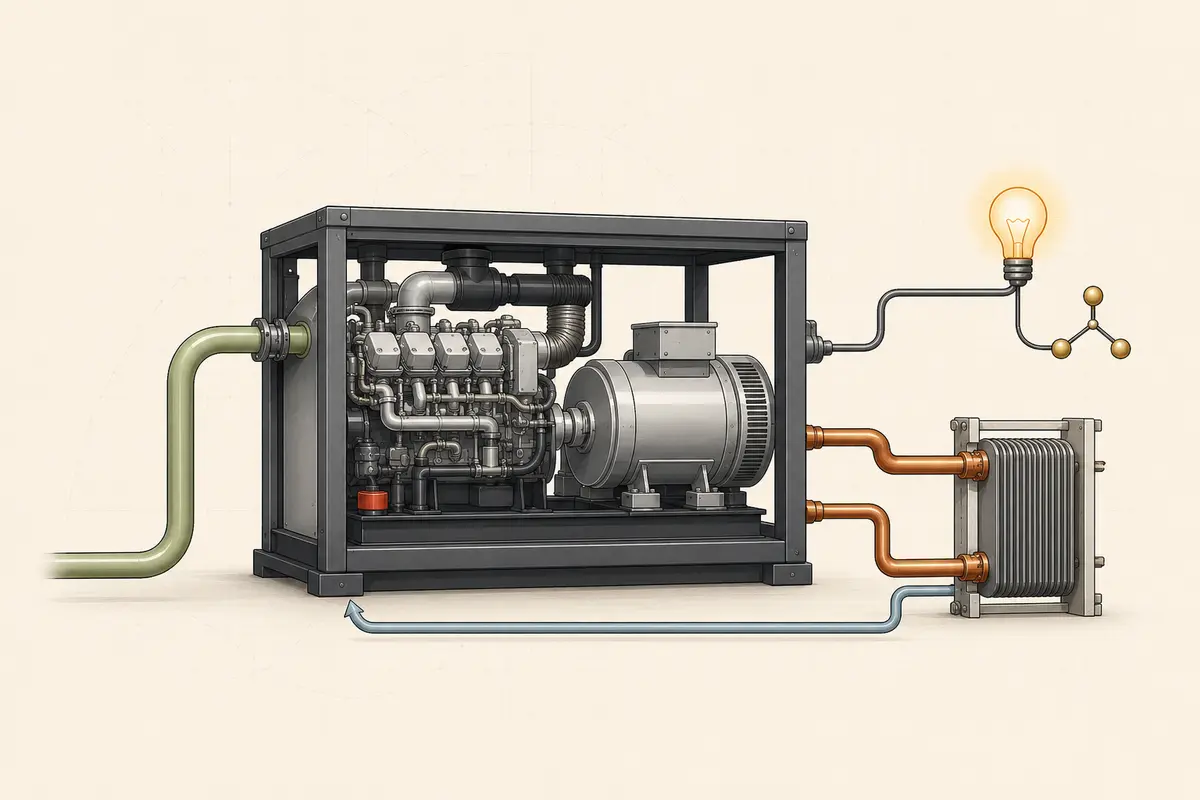
Biogas contains methane, which can be combusted and converted into useful energy. Many plants use a combined heat and power (CHP) unit that produces electricity and heat at the same time.
How does CHP work?
After condensate removal and reduction of unwanted compounds, biogas enters a gas engine. The engine drives a generator that produces electricity. Heat from engine cooling and exhaust gases is recovered through heat exchangers rather than lost entirely to the surroundings.
The plant itself consumes some of the electricity produced: pumps, agitators, feeding equipment, fans and controls need a continuous supply. The remainder can be used on site or exported to the grid, subject to technical and contractual conditions.
Heat needs an actual user
The process itself is usually the first heat user because the digester must be kept at operating temperature. Remaining heat can supply buildings, agricultural drying, industrial processes or a local heat network. The user must, however, be close enough and its demand must coincide with production.
Efficiency must be assessed as a whole
The engine's electrical rating is not the only measure of a sound project. Biogas quality, unit availability, the plant's own consumption, planned downtime, effective heat use and maintenance costs all matter. Unused heat means part of the energy potential goes unexploited.
Sources and further reading
- T. Al Seadi et al., Priručnik za bioplin, BiG>East, 2008.
- U.S. EPA – Basic Information about Anaerobic Digestion
This article is for information only. It does not replace design work, a professional assessment, or legal, environmental or financial advice for a specific project.