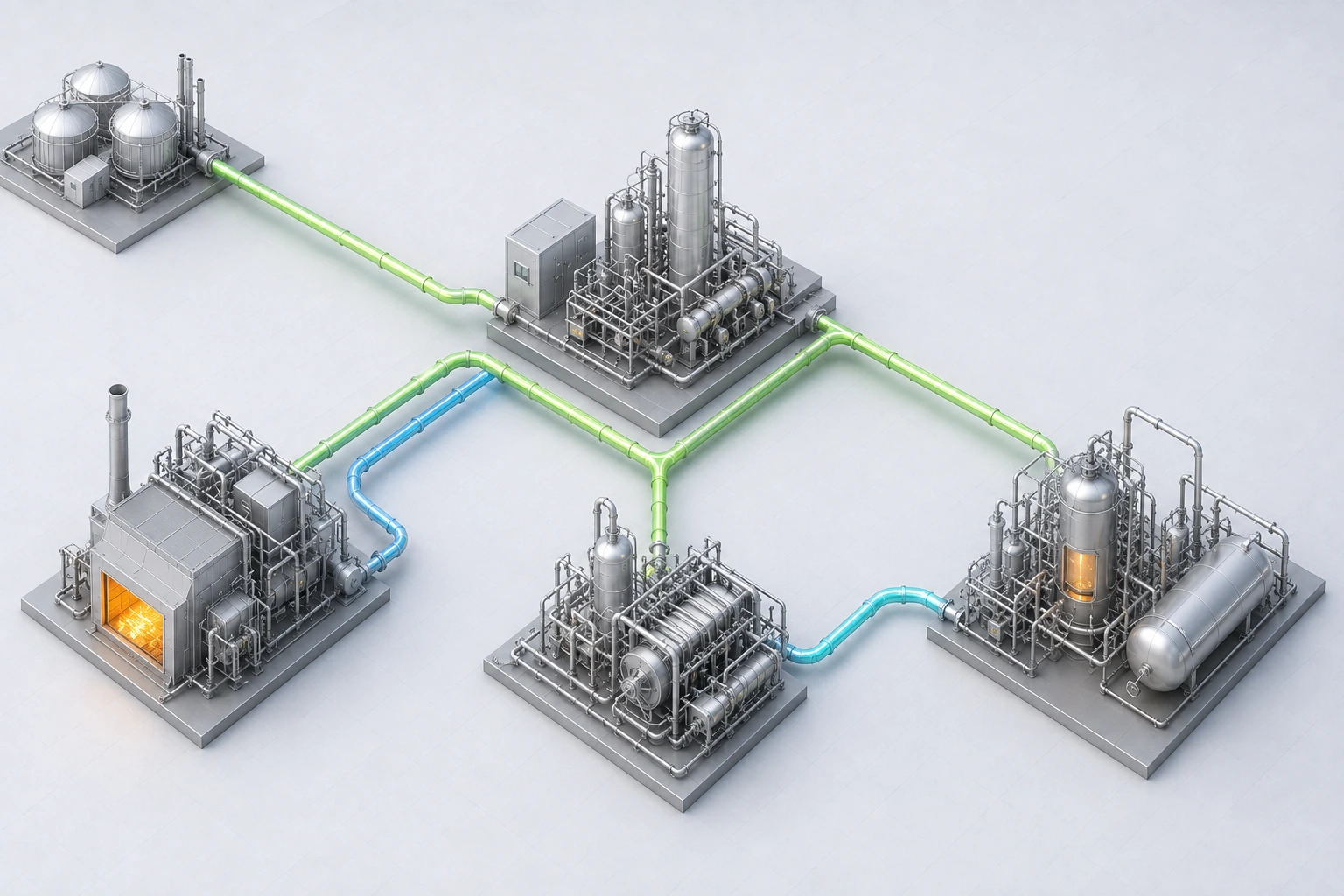
Industry uses natural gas for two distinct purposes. One is energy: a stable flame, steam and high process temperatures. The other is methane's chemical structure as a source of hydrogen and carbon. Biomethane can replace the fossil molecule in both cases, but the climate outcome depends on the feedstock, methane losses and the entire production chain.
Process heat and steam
After appropriate upgrading, biomethane can substitute for natural gas in many boilers, dryers and industrial burners. It is particularly relevant to processes that are difficult to electrify directly because of high temperatures, flame requirements or existing equipment.
The technical conversion may be minor, but commercial and regulatory requirements are not. The gas's renewable origin must be demonstrated, double counting avoided, and physical or accounting-based supply arranged by contract. In some processes, the effects of gas composition on the flame, product and emissions must also be verified.
Hydrogen from biomethane
In steam reforming, methane reacts with steam to yield a hydrogen-rich synthesis gas. Further reaction and separation produce hydrogen, while most of the carbon ends up as CO₂. If the methane input is biogenic and the CO₂ is captured, this route may have a different carbon profile from conventional fossil-based hydrogen.
This is still distinct from renewable hydrogen produced by electrolysis under the rules for fuels of non-biological origin. Its designation, incentives and recognition of emission savings depend on the regulatory methodology and evidence for the entire chain.
Synthesis gas and methanol
Controlled reforming produces a mixture of hydrogen and carbon monoxide. Catalytic conversion can turn it into methanol and other chemicals. Methanol is used as a fuel, solvent and starting material for many compounds, giving a renewable carbon source value beyond energy production.
This process requires a much larger scale and more integration than a simple industrial boiler. Synthesis gas quality, compression, catalysts, product separation, heat integration and continuous sales must be addressed as parts of one industrial project.
Why do industrial clusters matter?
A small biogas plant often lacks the volume needed to make its own chemical synthesis economical. An industrial cluster can connect several biomethane sources, an existing gas pipeline, substantial heat demand, a source of hydrogen or CO₂ and shared product logistics. Complex equipment can then operate for more hours and at a larger scale.
When is it better to sell biomethane directly?
Further conversion does not create value by itself. If a reliable buyer for biomethane exists in the grid or industry, reforming and synthesis make sense only when the product commands enough of a premium to cover capital costs, energy, maintenance and market risk. Each added step reduces the energy available for sale.
What should be compared?
- continuous biomethane supply and required input purity
- temperature, pressure and annual profile of industrial demand
- value of certificates and rules for recognising the renewable product
- buyer for hydrogen, methanol or another product, and the minimum economic scale
- potential to capture, use or store the resulting CO₂
Sources and further reading
- European Commission – 5 things you should know about biogas and biomethane
- IEA Bioenergy – Renewable gas: deployment, markets and sustainable trade
- IEA Bioenergy – Annual Report 2023
This article is for information only. Emissions status, product designation, process yield and economics depend on the process, energy source, feedstock and applicable certification rules. The illustration is not a detailed process design.