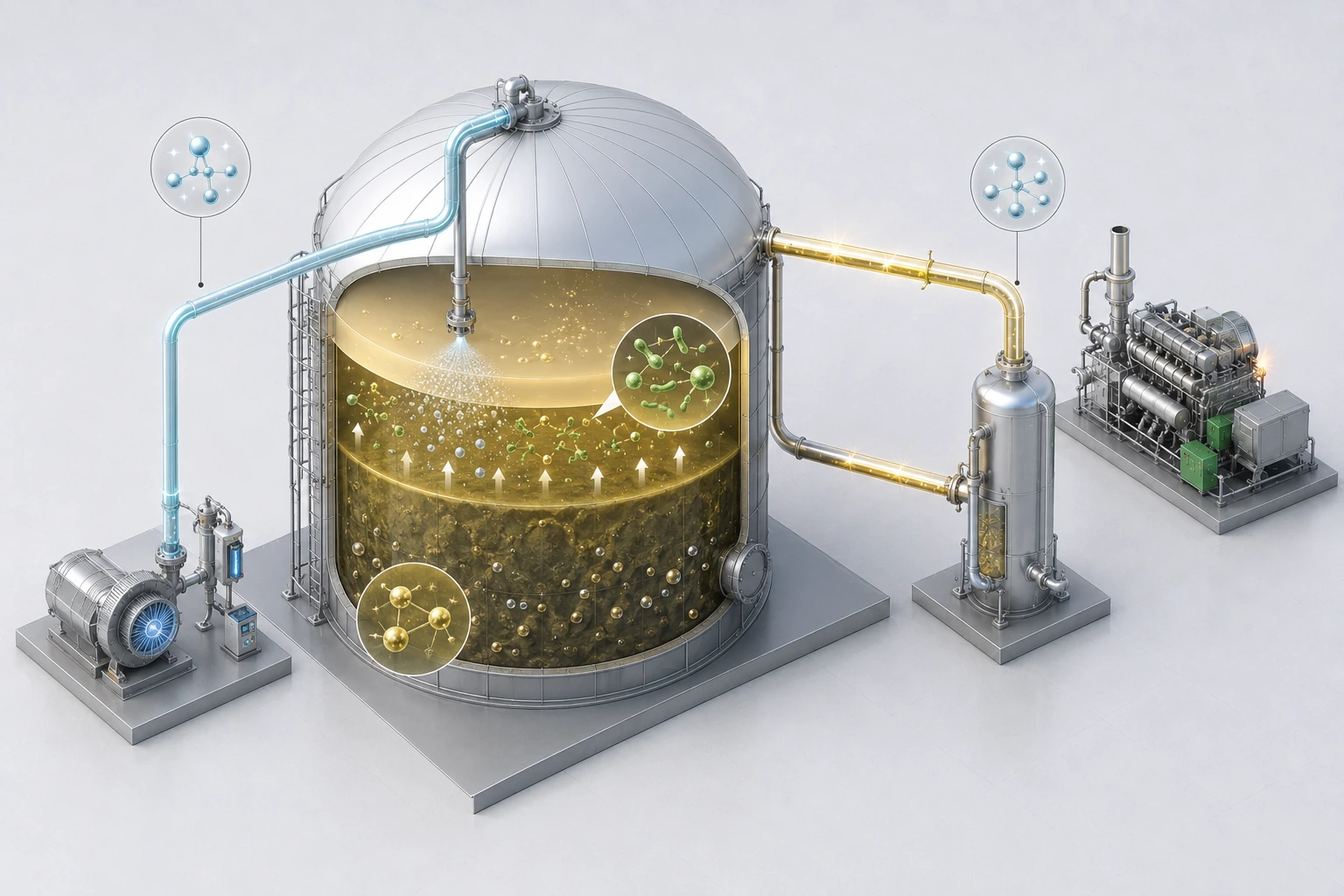
One of the simpler ways to reduce hydrogen sulphide is to treat it within the digester. Microaeration introduces a small, controlled amount of air or oxygen into the gas space or a selected process zone. This creates conditions in which sulphur-oxidising microorganisms convert some H₂S into elemental sulphur or oxidised sulphur compounds.
Why can this method be attractive?
The advantage is a reduced load on equipment downstream of the digester. Less H₂S means lower activated-carbon consumption, slower filter wear and less corrosive gas. The EPA lists microdosing air into the digester gas space as one option for in-vessel H₂S removal.
Oxygen control is essential
Microaeration does not mean blowing air into the fermenter without control. Anaerobic digestion must remain anaerobic, and a biogas-air mixture demands a rigorous safety approach. The system needs a stable, limited flow, gas-composition measurement, backflow protection, suitable valves and clearly defined interlocks. Additional oxygen and nitrogen can also be undesirable for some subsequent upgrading or liquefaction technologies.
Where can air be introduced?
The concept depends on digester design. Air can be introduced into the gas space above the biomass or through a dedicated distribution system. Local areas with excessive oxygen concentrations must be avoided, as must unwanted sulphur deposits on membranes, structures or pipework.
When is microaeration insufficient?
If inlet H₂S is very high or highly variable, or the end user requires very low concentrations, microaeration is usually combined with another stage. This could be a biological scrubber, iron salts in the process or a final adsorption filter. Especially for fuel cells and Bio-LNG, microaeration should be regarded as preliminary desulphurisation, not the sole safeguard.
Equipment examples
Microaeration itself is often integrated into the biogas plant and is not tied to any one agitator or filter brand. Examples relevant to a subsequent external biological stage include Biogasclean and Paques THIOPAQ. Design also calls for suitable blowers, O₂/H₂S measurement and safety fittings.
Sources and further reading
- U.S. EPA – AgSTAR Operator Guidebook
- Paques – Gas desulfurization
- Biogasclean – Biological Moving Bed Reactor
This article is for information only. The final cleaning specification must be based on analysis of the actual gas composition, the end user's requirements, safety rules and confirmation from equipment manufacturers. The illustration shows the functional principle, not a construction design.