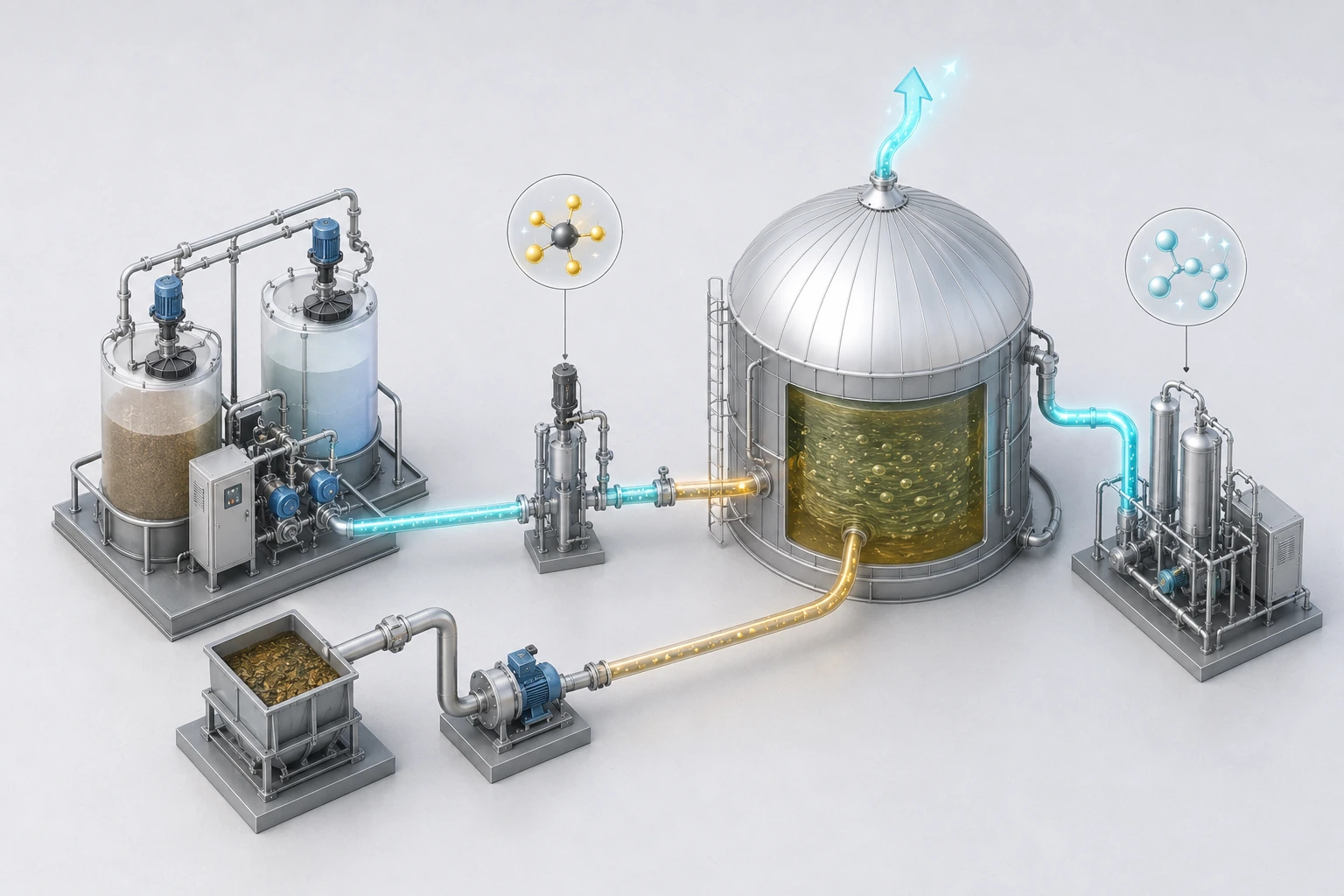
Hydrogen sulphide need not be removed only from the finished biogas. Part of the sulphur load can be addressed in the digester's liquid phase by adding iron salts. Iron reacts with sulphides to form sparingly soluble compounds, reducing the amount of sulphur that enters the gas phase as H₂S.
Which chemicals are used?
Different iron salts, such as iron chloride or iron sulphate, are used in biogas and wastewater processes depending on the process and availability. Kemira offers BDP products for biogas applications combining iron and trace elements, and positions them for both H₂S reduction and process stabilisation.
Where should they be dosed?
The dosing point may be in the receiving tank, wet-feeding line, recirculation stream or immediately upstream of the digester. This is relevant to the feeding systems discussed on the TOTAL BAU blog: chemical dosing can be integrated physically and through process controls with an existing feed system.
Dosing according to the actual sulphur load
A fixed chemical dose is not always appropriate. Sulphur levels vary with feedstock, changes in the feed mix and process conditions. A sound approach combines laboratory analysis, biogas H₂S measurements, tracking of chemical consumption and the ability to adjust the dose. Overdosing increases costs, adds salts and can affect digestate composition.
Dosing system equipment
A typical assembly includes a chemical tank, bund, metering pump, level measurement, non-return valves, a pulsation damper where needed, an injection point and controls. Hose, valve and seal materials must be selected for the corrosive chemicals involved. ProMinent and similar suppliers offer standard metering-pump systems, while Kemira is an example of a process chemical supplier.
What does this method leave untreated?
Iron salts do not remove moisture, CO₂, siloxanes or VOCs. They address sulphur and are therefore usually part of a wider gas-cleaning chain. Where the end use requires very low H₂S levels, an adsorption polishing filter is often installed downstream.
Sources and further reading
- Kemira – From magical microorganisms to clean, sustainable energy
- U.S. EPA – AgSTAR Operator Guidebook
This article is for information only. The final cleaning specification must be based on analysis of the actual gas composition, the end user's requirements, safety rules and confirmation from equipment manufacturers. The illustration shows the functional principle, not a construction design.