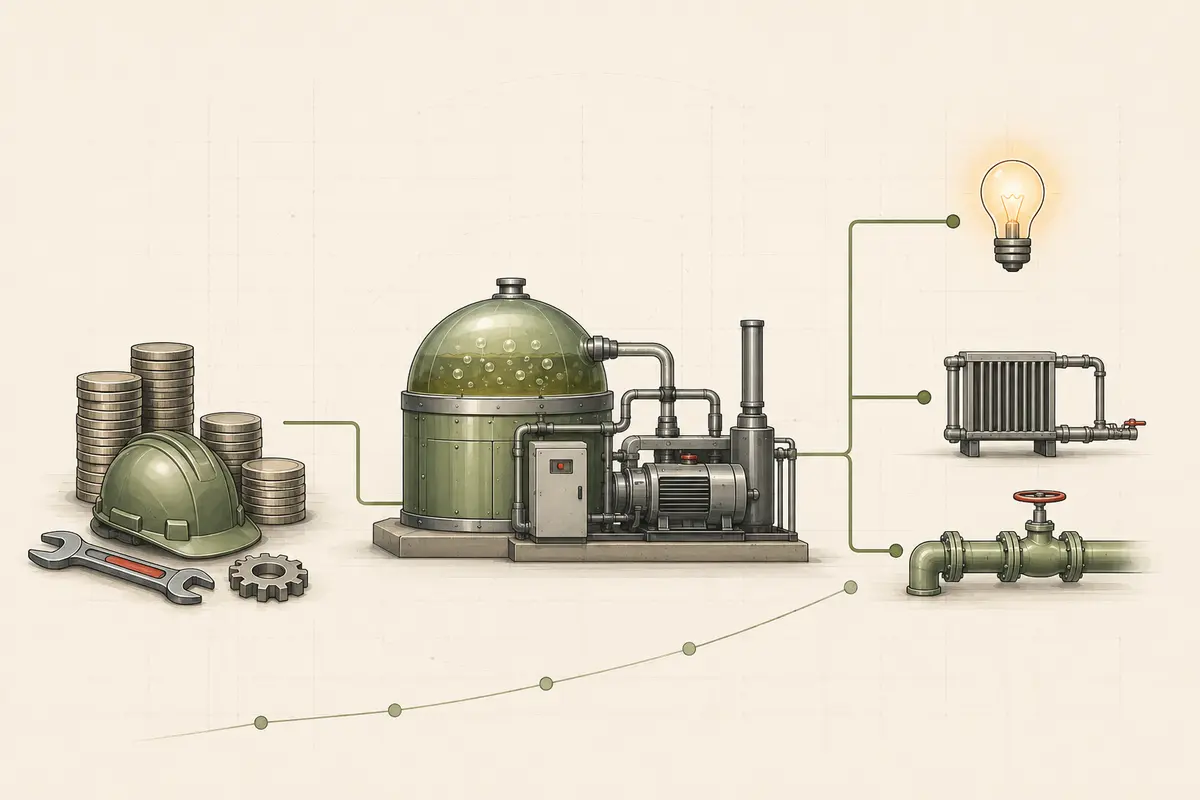
A biogas plant is a long-term infrastructure investment. A simple calculation of rated output multiplied by the energy price is often too optimistic: it ignores downtime, on-site consumption, changes in feedstock and actual operating costs.
Main capital cost categories
Initial capital costs include land and site preparation; buildings; feedstock reception and storage; digesters; the gas system; energy or biomethane equipment; electrical installations; controls; utility connections; design; permits; and a contingency for unforeseen work. Working capital for the commissioning period must also be included.
Revenue and savings
Value may come from electricity, heat, biomethane, gate fees for certain organic materials, reduced energy purchases and digestate use. Every revenue stream needs a realistic volume, price and contractual basis. Heat without an actual user is not revenue.
Operating costs
Operating costs include feedstock procurement and transport, staff, laboratory analyses, electricity consumed by the plant, maintenance of engines and process equipment, spare parts, insurance, contaminant disposal, digestate management and administration. A major failure can cause repair costs and lost revenue at the same time.
Scenario analysis
Alongside the base case, the model should test lower gas yield, more expensive feedstock, fewer operating hours, higher interest rates and a delayed grid connection. Indicators such as payback period, net present value and internal rate of return should be considered together.
European policy creates room for biomethane development, but a policy target does not guarantee revenue for an individual project. An investment decision must rest on local contracts, a demonstrable feedstock base and a technically verified concept.
Sources and further reading
- T. Al Seadi et al., Priručnik za bioplin, BiG>East, 2008.
- U.S. EPA – 10 Keys to Digester Success
- European Commission – Biomethane
This article is for information only. It does not replace design work, a professional assessment, or legal, environmental or financial advice for a specific project.