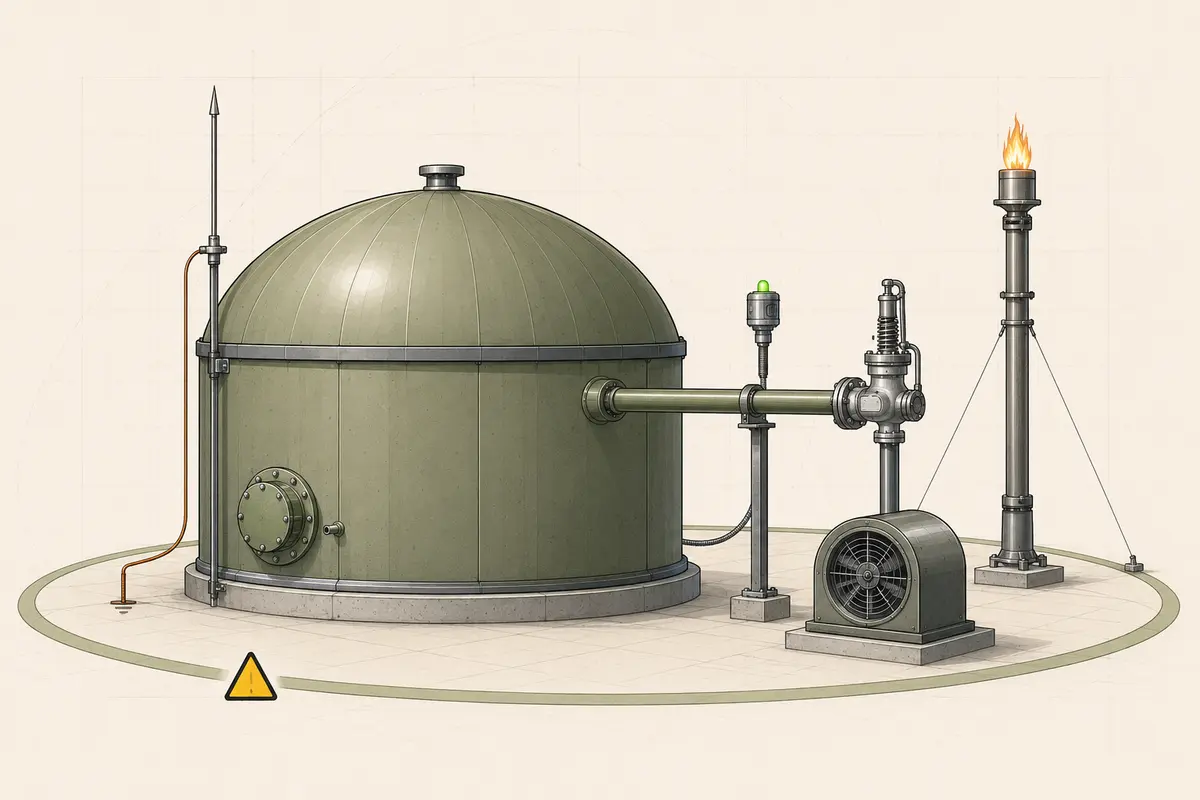
A biogas plant handles flammable gas, enclosed vessels, electrical equipment, moving machinery and biological materials. These risks call for systematic control throughout design and operation.
Methane and explosive atmospheres
Methane can form a flammable mixture with air. Potential release points must therefore be assessed and classified, and equipment in hazardous zones must suit the expected conditions. Ventilation, gas detection, equipotential bonding, lightning protection and control of ignition sources form part of one safety concept.
Hydrogen sulphide and confined spaces
Hydrogen sulphide is toxic and may be present in biogas or released when digestate is handled. Confined spaces also pose an oxygen-deficiency risk. Entry into tanks, pits and similar spaces must not be treated as routine: it requires a written procedure, atmosphere testing, ventilation, suitable protective equipment, supervision and a rescue plan.
Pressure, flare and safety devices
The gas system needs protection against both overpressure and underpressure. A safety flare disposes of surplus gas in a controlled manner when the main user is unavailable. Valves, flame arresters, condensate traps and measuring devices require regular inspection and maintenance.
Organisation matters as much as equipment
Clear responsibilities, staff training, records, pipe identification, contractor management and an incident response plan reduce the likelihood of error. Changes in feedstock, reconstruction or temporary disabling of a protective system require a risk assessment before work begins.
Sources and further reading
- T. Al Seadi et al., Priručnik za bioplin, BiG>East, 2008.
- European Commission – 5 things you should know about biogas and biomethane
- U.S. EPA – Frequent Questions about Livestock Biogas Projects
This article is for information only. It does not replace design work, a professional assessment, or legal, environmental or financial advice for a specific project.