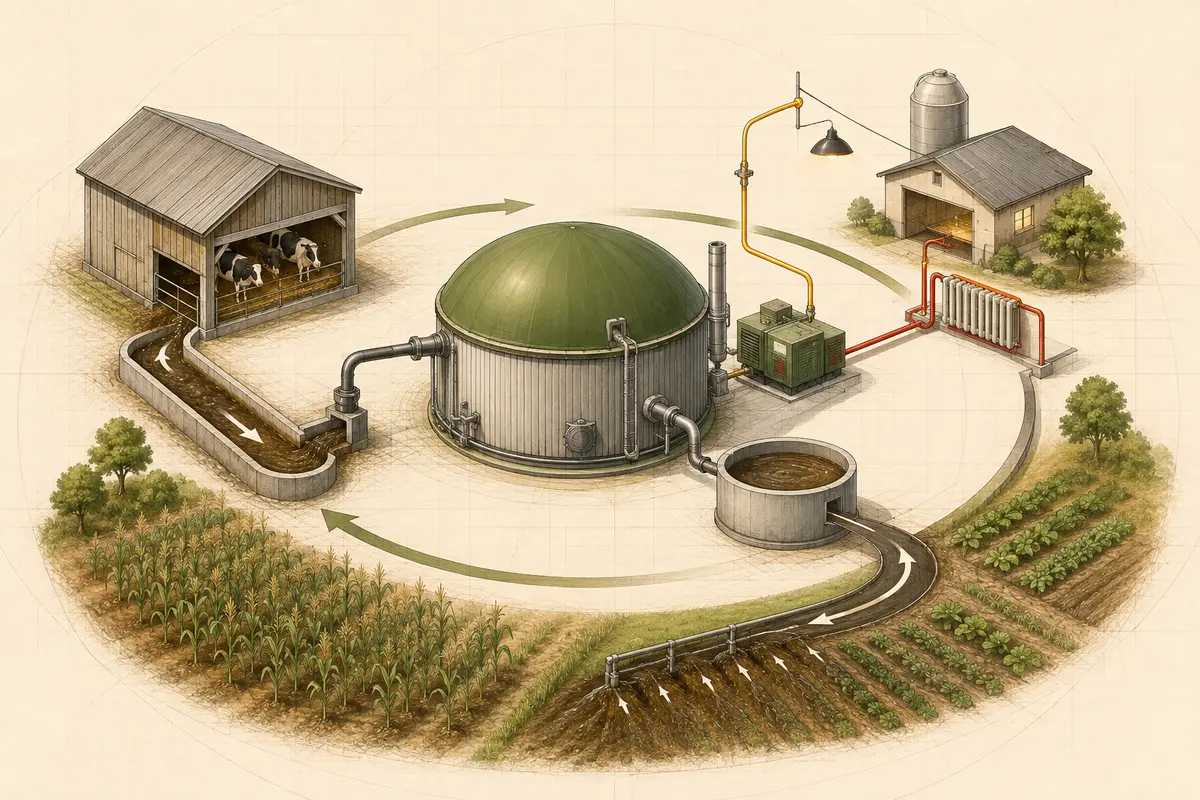
On a farm, a biogas plant can serve several needs: processing manure and organic residues, producing electricity or heat, and returning nutrients to agricultural land. The benefits are not automatic; they depend on day-to-day management.
More reliable organic material management
An enclosed reception and digestion system can help manage large volumes of slurry and other organic streams. The methane produced is captured and used for energy rather than released uncontrolled into the atmosphere. Digestate can be stored and applied according to a plan and crop needs.
Energy for on-farm use
Electricity can cover part of the farm's or associated production's demand. Heat can supply buildings, hot water, dryers, greenhouses or process loads. Its greatest value is realised when there is a steady heat user for much of the year.
A new operation, not just new equipment
A biogas plant operates continuously. It needs a responsible operator, a feeding plan, engine and pump maintenance, process monitoring, records of incoming materials, digestate management and readiness for breakdowns. The farm must therefore assess whether it has sufficient people, expertise and time, or needs an external operator.
Reliance on feedstock available only intermittently, or on uncontracted revenue, is a particular risk. Before deciding, the farm should prepare at least an annual balance of feedstock, energy and digestate, then test it against several realistic scenarios.
Sources and further reading
- T. Al Seadi et al., Priručnik za bioplin, BiG>East, 2008.
- U.S. EPA – Frequent Questions about Livestock Biogas Projects
This article is for information only. It does not replace design work, a professional assessment, or legal, environmental or financial advice for a specific project.