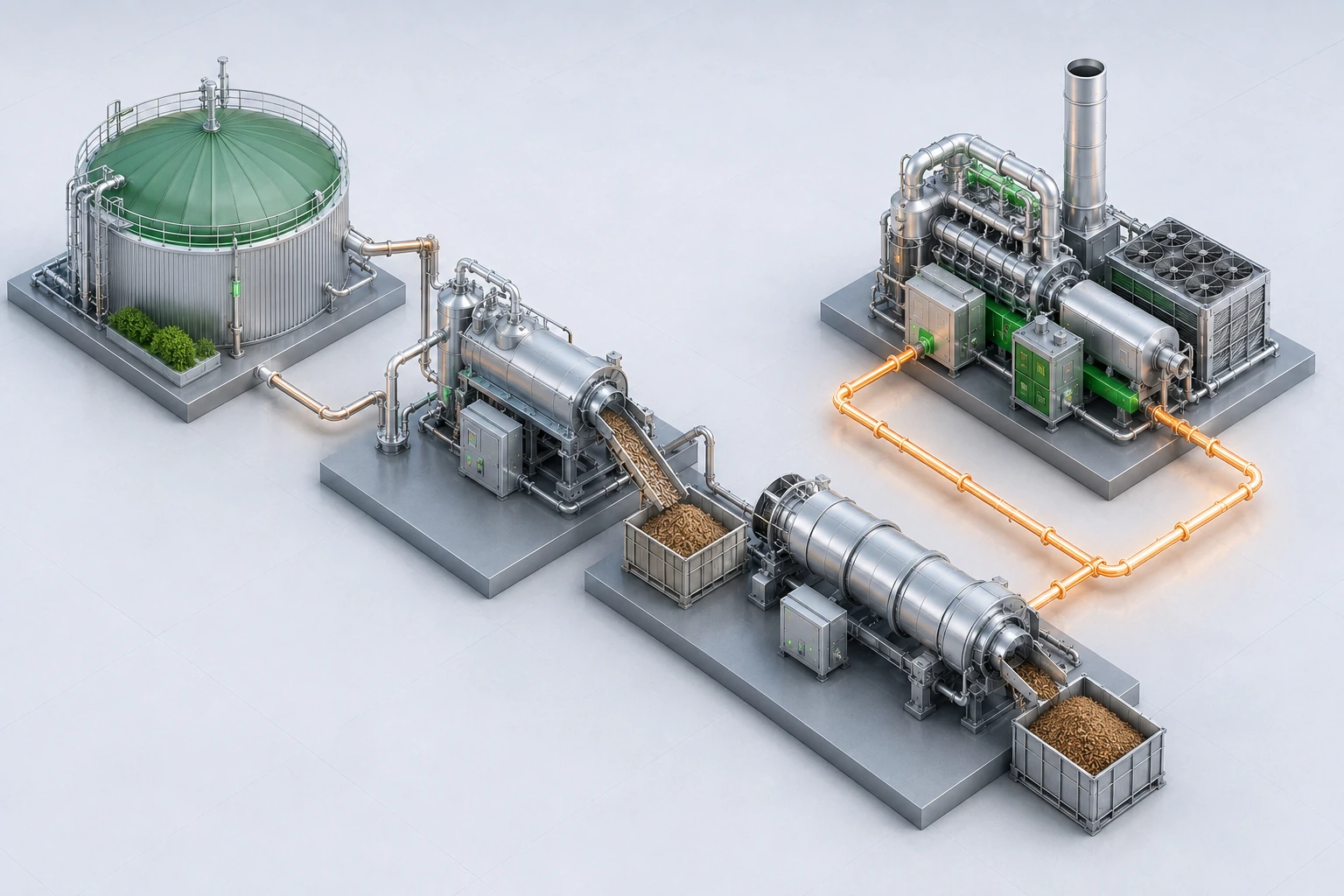
The separated solid fraction still contains considerable water. It takes up space, is relatively heavy to transport and is harder to turn into a standardised product. Drying can be the next processing step if unused CHP heat is available on site.
Basic process flow
After digestion, digestate enters a separator. The liquid fraction goes to final storage or a lagoon for later use in accordance with an agronomic plan. The solid fraction passes through a receiving hopper and dryer feed system to the dryer, then to dry-material storage. Heat is usually supplied as hot water through a water-to-air heat exchanger.
What does drying achieve?
- lower mass and volume to store and transport
- material that is easier to meter, bag or store in bulk
- potential for subsequent pelletising or granulation
- a new use for heat that would otherwise be rejected
Drying alone does not create a premium product. Value depends on digestate composition, nutrient content, hygiene requirements, contaminants and the market for the intended use.
Exhaust-air treatment is a crucial part of the process
Heating digestate can release odours, ammonia, dust and moisture. Ventilation and air treatment must therefore be included from the start. Depending on the material and permit, biofilters, chemical air scrubbers, condensation or combined systems may be needed.
Examples of available technology
- RHS RHINO – a German agitated dryer developed for agriculture as well. RHS states that it can handle separated digestate and the liquid fraction, drying material to a high dry matter content depending on requirements.
- Dorset Green Machines – belt dryers and back-mixing systems for digestate, with additional air-cleaning equipment.
- ANDRITZ – offers several technologies for digestate, including separation and belt, paddle and drum dryers that can use low-temperature waste heat.
- STELA Laxhuber – belt systems and long-standing references for drying digested and other wet streams with biogas-plant heat.
What comes after the dryer?
The simplest route is to use the dry material in bulk where permitted and commercially justified. A further step might be pelletising and granulating digestate, mixing with other components or making a specific organic or organo-mineral product. That is a separate project requiring laboratory analysis, an agronomic concept and regulatory review.
Sources and further reading
- RHS Tech – RHINO Agriculture
- Dorset Green Machines – Digestate dryers
- ANDRITZ – Biogas and organic waste solutions
- STELA – Company history / biogas waste heat drying
This article is for information. An actual installation requires a heat balance, equipment manufacturer data and checks of local conditions, permits and applicable regulations. The illustration shows a functional concept, not a detailed engineering design.